The After School Crash Explained
FREE DOWNLOAD
Take It A Step Further
Want something practical to keep on hand? Download the free After School Crash Plan for simple strategies to help your child decompress, reconnect, and transition home after a long day.
The after-school pickup.
Your smiling child runs out of the building and into your arms. You get home, offer their favorite snack, and gently ask about their day.
And then—boom.
Tears. Yelling. Flopping. Screaming.
What just happened?
Ah. The After-School Crash.
Every child does this at some point. It's common. It's normal. And it’s not a reflection of your parenting or your child’s character.
It’s a natural letdown after a long day of holding it together.
Let’s unpack the sensory, emotional, and developmental reasons behind this thorny time of day—so you can respond with more understanding, and maybe a little more patience (with them and with yourself).
The Sensory Load of a School Day
Modern classrooms are works of art - colorful spaces full of learning and achievement. But they’re also sensory minefields.
Let’s start with the environment. At any given moment, your child may be processing:
Airflow and room temperature
Fluorescent lighting
The smell of another child’s laundry detergent
The sound of chairs scraping, pencils tapping, voices talking, and announcements blaring
The visual clutter of 1,800 art projects, posters, and signs
A crayon that feels weird after Johnny peeled the paper off it (thanks, Johnny)
And then there’s the cafeteria… don’t get me started…
All of that is just external sensory input. Now add:
Hunger or thirst
A full bladder they can’t always excuse themselves to empty
Their shirt feeling slightly off
A pinky toe snagged on the seam
Exhausted yet?
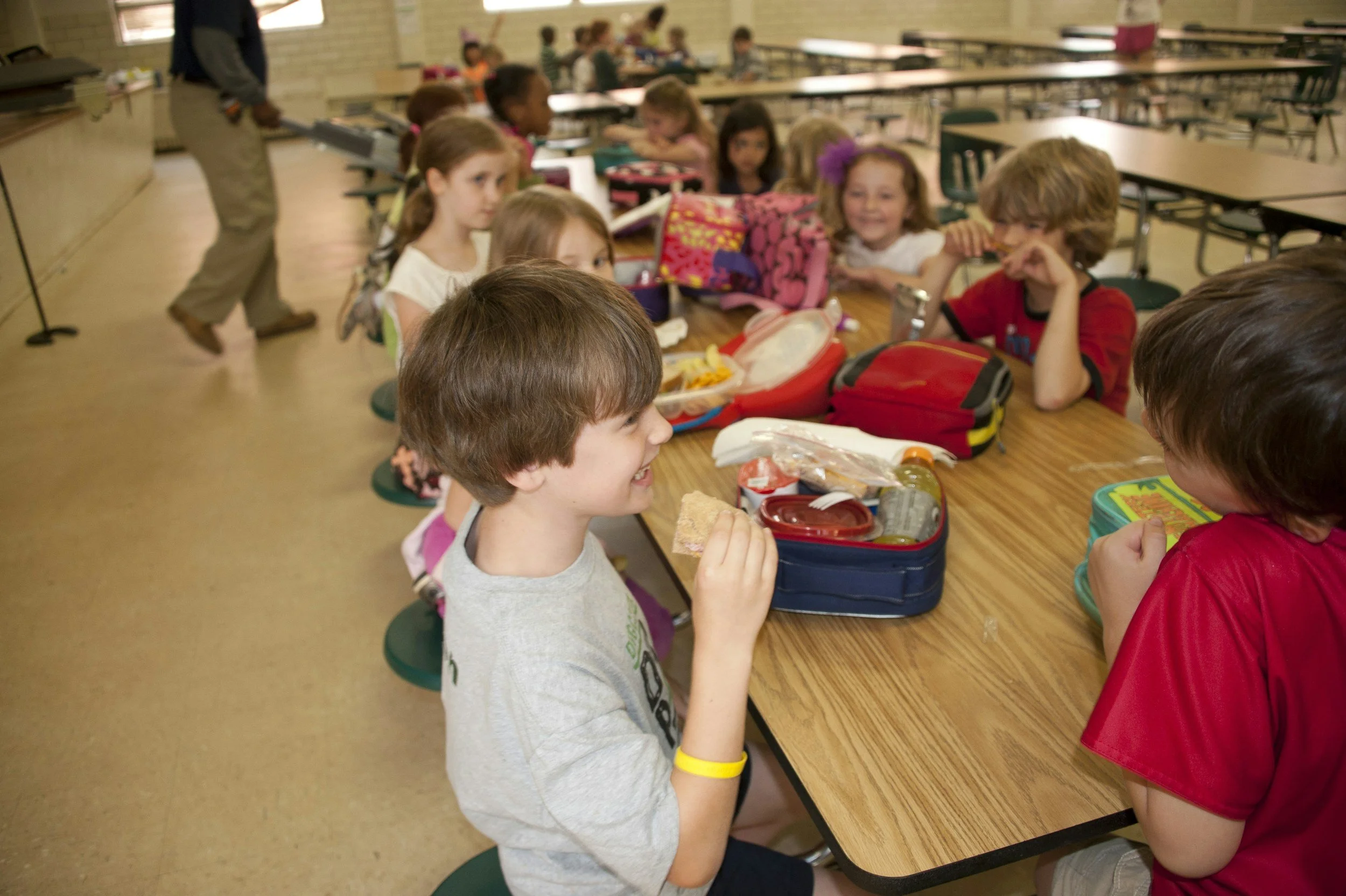
Your child’s nervous system is constantly sorting through this flood of input. It’s quiet and mostly invisible, but it takes energy—energy that isn’t available for learning, self-regulation, or social connection.
And while many schools are improving access to sensory supports (like wobble cushions, Therabands, and fidgets), there’s still a long way to go. These tools are often misunderstood as distractions rather than necessary supports for regulation.
Take whole-body listening as an example:
On paper, it sounds great—sit still, make eye contact, stay quiet. I’m showing you I’m listening. But for some kids, the effort to meet those standards leaves them with no capacity left to actually listen.
The Hidden Work of Regulation
Kids spend their entire day monitoring and managing their behavior.
They want to do well. They know what’s expected. So they push through.
But there’s a difference between regulating behavior (a conscious, effortful act) and being in a regulated state (a subconscious, physiological condition).
Behavioral regulation comes from the cortex—it’s a thinking process.
Sensory regulation happens deep in the midbrain—it’s automatic.
At school, children use up all their “regulation fuel” trying to stay calm, still, quiet, polite, and focused. Yet they’re often in a state of sensory overflow—too much input, not enough support, and no more reserves left.
By the time they get home, they’ve overdrawn their emotional and sensory bank accounts.
They don’t need advice.
They don’t need a consequence.
They need to borrow your calm.
Why Home Feels Like the Safest Place to Crash
This is where co-regulation comes in.
When babies are born, they can’t regulate themselves—so they rely on a caregiver’s nervous system to calm theirs. We snuggle them, rock them, hum to them, breathe with them. Their bodies match ours.
That need doesn’t disappear with age. It just looks different.
After school, when your child is dysregulated and depleted, their brain does a safety scan:
“Can I stay in this meltdown alone?”
“Or is there someone safe I can collapse with?”
And if that safe person is you—they will crash.
I know this is hard.
I’ve sat on the living room floor next to my sobbing child who lost it after I asked them to empty their backpack.
But the very fact they unravel in your presence? That means you are safe. That’s their nervous system saying, “This is the person who helps me come back to myself.”
There are few compliments more powerful than that.
How to Support the Crash (Without Losing Your Mind)
You don’t need to fix the crash.
In fact, trying to fix it can escalate things.
Remember: regulation is something that happens to you, not something you can logic your way into. So instead of solving, try supporting.
Here’s how:
Create a low-demand buffer after pickup
No questions. No tasks. Just snack, movement, or solo play.Use sensory tools
Think: chewy snacks, a crash pad, weighted lap animal, body sock.Offer co-regulation
Quiet presence, not conversation. Just be there.Stick to a consistent routine
Predictability is powerful. It reduces uncertainty and stress.Prep older kids ahead of time
In the morning, let them choose a snack and a calming activity from a simple menu—so after school, they can settle without decisions.
When to Dig Deeper
The occasional after school crash is normal. Even the not so occasional after school crash is normal. But if you’re noticing a pattern that’s increasing in intensity or frequency, it might be time to take a closer look.
Red flags to watch for:
Crashes are daily and extreme
Your child shows aggressive outbursts
They resist or refuse school altogether
Recovery takes hours—or doesn’t happen
Their emotional state worsens over time
If any of this rings true, talk to your pediatrician or connect with a licensed OT or mental health professional for next steps.
Sensory Overflow Is Not Misbehavior
No child chooses to melt down.
Sensory overflow is a message, not misconduct.
Behavior is communication.
Sensory is the language.
Your child is saying, “I’ve used up all my regulation for the day. There’s nothing left.”
The after-school hours don’t need to be picture-perfect with themed snacks and pre-scheduled enrichment. You have full permission to keep it simple.
Take deep breaths. Learn what helps your child settle. Build a routine that honors that.
When the crash happens - and it will - remember: you are the safe place.
Not the feelings chart.
Not the mindfulness jar.
You.
And that’s exactly what your child needs most.
